Executive Summary
Biotech leaders often face a binary choice: build an expensive in-house team or outsource everything. The most successful companies, however, are adopting a hybrid approach that maximizes agility and minimizes fixed costs.
- The Problem: Hiring full-time staff for peak demand leads to high fixed costs and underutilization during quiet periods (the "Capacity Trap").
- The Solution: A hybrid model that keeps core, proprietary biology in-house while leveraging strategic partners for standardized pipelines, infrastructure management, and niche expertise.
- The Result: Improved burn rate control, faster turnaround times, and access to a broader range of technical skills without the recruitment overhead.
The Capacity Trap: Why Linear Hiring Fails
In the lifecycle of a drug development program, the demand for bioinformatics is rarely linear. It comes in waves—massive spikes during data acquisition phases (e.g., receiving FASTQ files from a CRO) followed by lulls during wet-lab validation or regulatory review.
This creates a fundamental resource allocation problem:
- Hiring for the Peak: If you hire enough staff to handle the busiest months, you are paying for idle hands during the quiet months. This burns capital inefficiently.
- Hiring for the Average: If you hire for the average workload, your team will be overwhelmed when the data floodgates open. Timelines slip, and critical insights are delayed.
This is the "capacity trap." Traditional hiring models lack the elasticity required for modern R&D. Furthermore, the recruitment process itself is a bottleneck, with the search for specialized talent often taking 3-6 months.
The Hidden Costs of "Building"
When calculating the cost of an internal team, many organizations look only at salaries. However, the Total Cost of Ownership (TCO) for a bioinformatics function is significantly higher:
1. Infrastructure & Cloud Costs
Bioinformaticians need high-performance computing (HPC) environments. Setting up, securing, and maintaining AWS/GCP environments requires DevOps skills, not just biology skills. This is often a hidden full-time job.
2. Recruitment & Retention
The market for skilled bioinformaticians is fiercely competitive. Turnover is high, especially if a lone bioinformatician feels isolated or lacks mentorship. Replacing a key team member can cost 1.5x their annual salary.
3. Software & Licensing
Commercial tools (e.g., pathway analysis software, visualization tools) often have expensive per-seat licenses that add up quickly.
4. Management Overhead
Who manages the bioinformatician? If the CSO is a wet-lab scientist, they may struggle to evaluate the code quality or technical choices of their computational staff.
The Hybrid Model: Best of Both Worlds
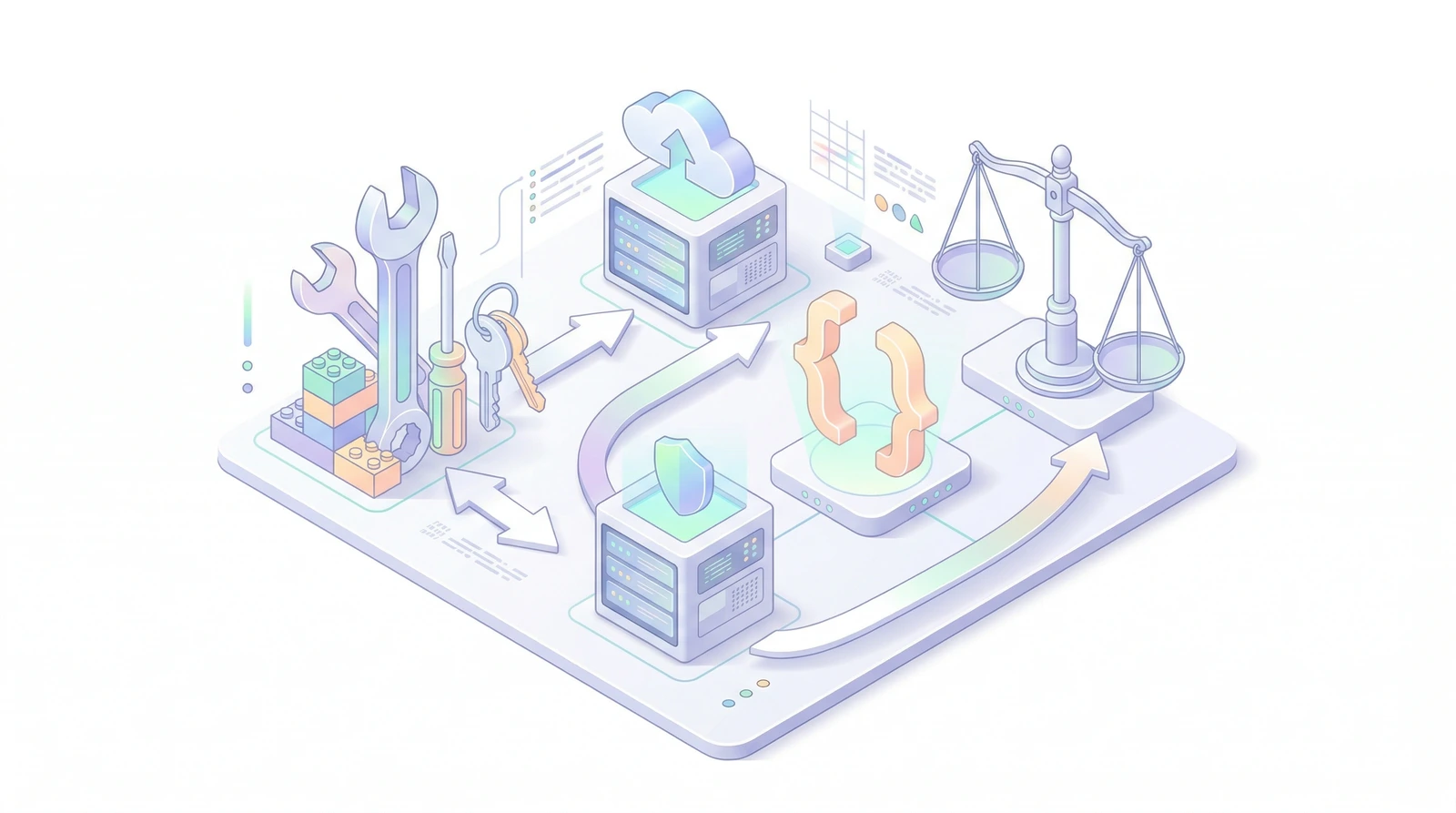
The solution isn't to choose between building and buying, but to integrate them. A hybrid model allocates resources based on the nature of the work:
Internal Team: The Core (Strategic)
Your internal bioinformaticians should be focused on high-value, proprietary tasks that require deep integration with your biological hypothesis. They are the "translators" who work side-by-side with wet-lab scientists to interpret results and guide experimental design. Their value lies in their institutional knowledge and biological context.
Best for: Hypothesis generation, experimental design, interpreting complex results, communicating with stakeholders.
Strategic Partner: The Scale and Scope (Tactical)
External partners are best utilized for execution, standardization, and specialized tasks:
- Scalable Pipelines: Routine processing of RNA-seq, WGS, or single-cell data should be standardized and automated. A partner can handle hundreds of samples overnight without you needing to build the infrastructure.
- Niche Expertise: You might need to run a spatial transcriptomics experiment once a year. Hiring a full-time expert for that is inefficient. A partner brings that specialized skill on-demand.
- Data Engineering: Cleaning, formatting, and uploading data to repositories (GEO, SRA) is critical but time-consuming. Outsourcing this frees up your internal team for science.
- Security & IP Protection: Reputable partners provide enterprise-grade security (SOC2, HIPAA) and ensure you retain full ownership of your data and intellectual property, mitigating the risk of internal data leaks.
- Validated Quality: Partners use battle-tested, version-controlled pipelines (e.g., Nextflow), ensuring reproducibility and data integrity for regulatory submissions—something often missing in "home-brewed" scripts.
Economic Analysis: A Hypothetical Scenario
Consider a Series A biotech company needing to process 200 RNA-seq samples and 50 Single-Cell samples over a year.
| Cost Category | Internal Build (1 FTE) | Hybrid Model (Internal Allocation* + Partner) |
|---|---|---|
| Salary / Fees | $160,000 (Salary + Benefits) | $80,000 (0.5 FTE Allocation) + $60,000 (Partner Fees) |
| Recruitment | $25,000 (Agency Fee) | $0 (Assumes internal reallocation) |
| Compute Infrastructure | $15,000 (AWS Direct Costs) | Significantly Reduced (Partner covers heavy compute) |
| Software Licenses | $10,000 | $5,000 |
| Total Year 1 Cost | $210,000 | $157,500 |
| Risk Profile | High (Single point of failure) | Low (Redundancy provided by partner) |
*Figures are estimates for illustrative purposes. "Internal Allocation" assumes a dual-role scientist (e.g., wet-lab/computational) or a junior analyst.
Decision Framework: When to Partner?
Use this checklist to determine if a hybrid or outsourced model is right for your current stage:
- Do you have sporadic spikes in data volume?
- Is your internal team spending >30% of their time on IT/DevOps tasks?
- Do you need access to specialized methods (e.g., spatial, multi-omics) that you don't use daily?
- Are you worried about "key person risk" if your lead bioinformatician leaves?
If you checked more than two of these boxes, exploring a strategic partnership is likely a sound investment.
Conclusion
The goal of any biotech is to bring therapies to patients faster. Bioinformatics should be an accelerator, not a bottleneck. By adopting a hybrid model, you gain the elasticity to move fast, the expertise to dive deep, and the financial control to extend your runway. It's not about giving up control; it's about taking control of your resources.