Executive Summary
Key decisions are made on incomplete biological data, turning R&D into a high-stakes guessing game.
- Over 90% of drug programs fail in clinical trials, not from a lack of effort, but from a lack of the right information at the right time.
- Our model embeds one of our PhD-level bioinformaticians directly into your R&D team, bringing deep expertise to your specific challenges.
- This framework—validating targets before the spend, understanding MoA to prevent surprises, and identifying biomarkers to ensure clinical success—is how modern drug discovery moves from high-risk bets to high-confidence programs.
A promising cancer target looks great in your initial screen. The team is excited. You invest $5 million into a screening campaign. Eighteen months later, you discover the target isn't just in tumors—it's critical for cardiac function. The program is dead. The investment, lost.
This isn't a failure of science; it's a failure of foresight. Over 90% of drug programs fail in clinical trials, not from a lack of effort, but from a lack of the right information at the right time. Key decisions are made on incomplete biological data, turning R&D into a high-stakes guessing game.
At HoppeSyler Scientific, we transform data into decision-making intelligence. We do this not as a distant vendor, but as a true strategic partner. Our model embeds one of our PhD-level bioinformaticians directly into your R&D team, bringing deep expertise in oncology and immunology.
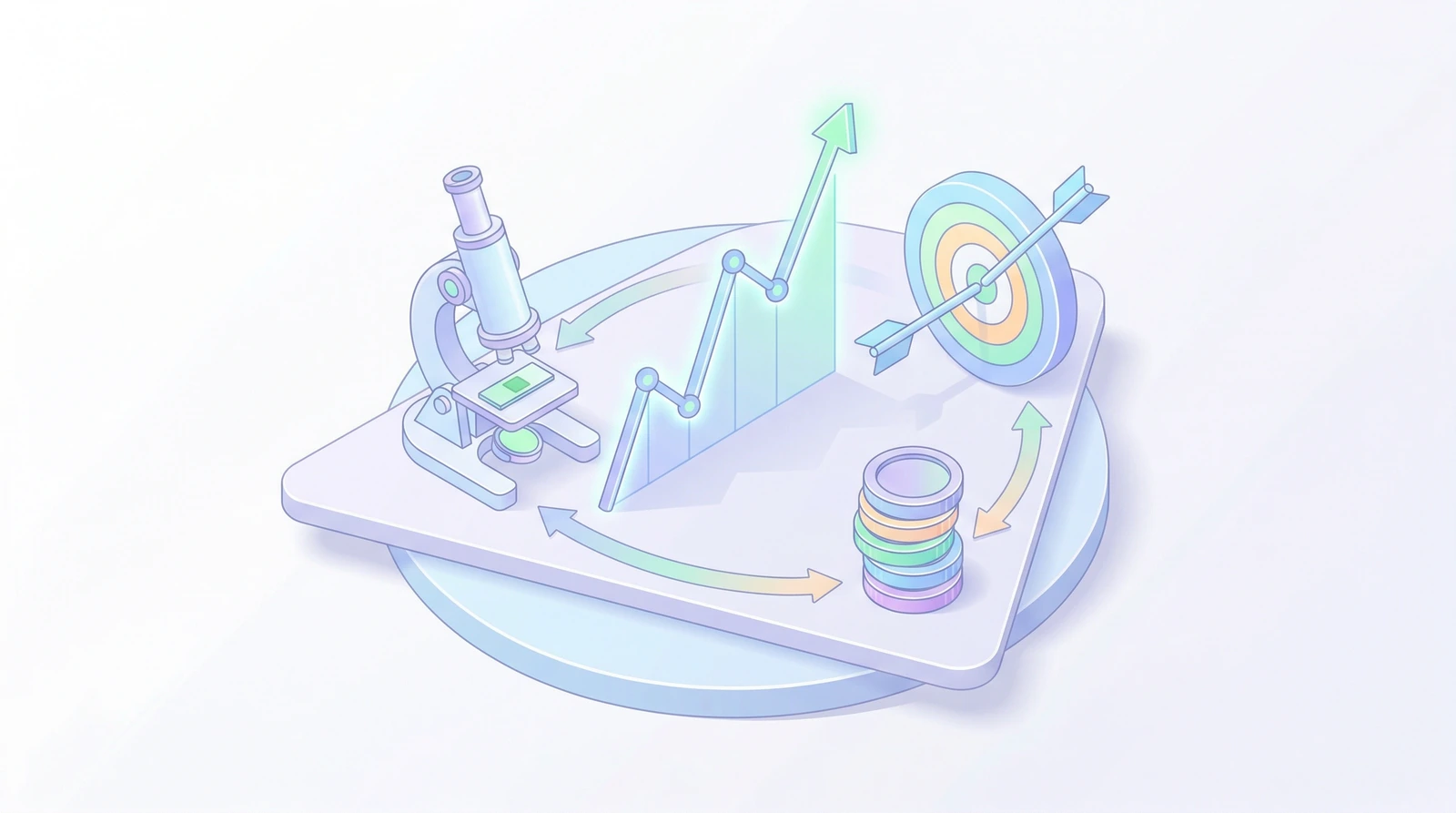
This isn't about just processing data; it's about providing the strategic foresight needed to make the right bets. The framework below is the methodology our embedded experts use to give R&D leaders the confidence to build high-conviction pipelines.
This is how we transform bioinformatics from a data-processing cost center into your strategic R&D partner.
Stage 1: Target Validation (Before the First Screen)
The most expensive mistake in R&D is committing to the wrong target. A target that looks promising in a simple assay can fail spectacularly in a complex biological system.
Our "Smart Bioinformatics" approach prevents this by front-loading validation in silico, before you spend a single dollar on screening. This is where our partnership model first proves its value.
- The Framework: We don't start in the wet lab; we start with data. Our embedded expert works with your team to integrate massive public datasets (TCGA, GTEx, DepMap) with your own early-stage results. We use a systematic approach to harmonize these disparate sources—weighting data by quality and relevance—into a single, queryable data asset. This creates a comprehensive, multi-dimensional view of your target that no single dataset can provide.
- The Critical Questions: This integrated approach allows us to answer the "go/no-go" questions that kill programs in late-stage development:
- Link to Disease: Is the target's dysregulation a driver of disease in your specific patient population, or just a passenger?
- Toxicity/Liability: Where is the target expressed in healthy tissues? A quick look at GTEx can predict unacceptable toxicity before it costs you millions.
- Dependency & Escape Routes: Is the cancer cell truly addicted to this target, or does a redundant pathway exist that will render your drug useless? (A deep dive into DepMap).
- The Impact: This process builds an unshakeable, data-driven case for a target. It allows you to commit resources with high confidence. Just as importantly, it provides the objective evidence needed to make the tough call to stop a program early—not as a failure, but as a strategic decision to redirect resources toward a target with a higher probability of success.
Stage 2: Mechanism of Action (MoA) Elucidation
You have a promising compound. But what does it really do? Off-target effects are the hidden assassins of drug programs, causing unexpected toxicity that derails clinical trials.
This is where we use an unbiased, multi-omics approach—integrating transcriptomics (RNA-Seq), proteomics, and single-cell analysis—to get the full story.
- The Framework: Our embedded expert helps you move beyond asking, "Did we hit the target?" and instead ask, "What was the total biological impact of our compound?" This is the core of "smart" bioinformatics: using integrated data to see the whole picture, not just the one you're looking for.
- The Unbiased View: By analyzing the entire system-level response, we can:
- Confirm MoA: Prove the compound modulates the intended pathway at the RNA and protein level.
- Reveal Off-Targets: Uncover hidden liabilities by identifying unintended pathway modulation or protein expression changes that could cause toxicity later.
- Understand Cellular Heterogeneity: Use single-cell data to see which specific cell types are responding, revealing nuances that are invisible in bulk analysis.
- The Impact: This provides a comprehensive safety and efficacy profile long before GLP tox studies, preventing catastrophic late-stage surprises and giving you a deep, defensible understanding of your drug's biology.
Stage 3: Biomarker Discovery (Finding Your Responders)
Many drugs "fail" in Phase II not because they are ineffective, but because they are only effective in a subset of patients. In a mixed population, a powerful effect is diluted to a marginal p-value, and a potentially life-saving, billion-dollar drug is abandoned.
This is the most tragic and avoidable failure in R&D.
- The Framework: The goal is to find a predictive biomarker early. By integrating 'omics data (RNA-Seq, WGS) from preclinical models, early trials, and publically available clinical consortiums (e.g., CPTAC, TCGA, and CCLE and others), we identify the molecular signature that separates "responders" from "non-responders."
- Patient Stratification: This analysis reveals a clear genomic or transcriptomic signature that predicts who will benefit most.
- The Impact: This signature becomes the foundation of a precision medicine strategy. It can rescue a "marginally effective" drug by focusing on the right patient sub-population, dramatically increasing your odds of clinical success.
What a True Partnership Looks Like
Becoming a strategic partner means moving beyond transactional data analysis and embedding ourselves in your R&D mission. We designed our engagement model to provide deep, ongoing support that traditional CROs cannot.
- An Embedded Expert, Not a Distant Vendor: We integrate one of our PhD-level scientists directly into your team. They attend your meetings, understand your challenges, and provide real-time strategic input. This isn't just about delivering a report; it's about having a bioinformatics expert in your corner, shaping decisions as they happen.
- Your IP is Your IP. Period: We operate under strict NDAs and use secure, segregated data environments. All discoveries, analyses, and intellectual property generated from your data are yours alone. Our role is to help you create value, not to claim it.
- Scientists First: Our team members are former pharma and biotech R&D scientists who became bioinformaticians. They have lived the challenges of the bench and the boardroom. They speak your language and are singularly focused on one thing: getting effective drugs to patients.
From Data Processor to R&D Partner
The highest-impact R&D teams no longer see bioinformatics as a cost center. They leverage it as a strategic partner for decision-making intelligence.
This framework—validating targets before the spend, understanding MoA to prevent surprises, and identifying biomarkers to ensure clinical success—is how modern drug discovery moves from high-risk bets to high-confidence programs. It provides the biological clarity needed to stop wasting money and accelerate the most promising drugs to the patients who need them.
Is your most promising target built on a foundation of rock or sand?
Let's find out. In a complimentary 30-minute Pipeline De-Risking Session, we will confidentially discuss one of your lead targets and map out the key "go/no-go" questions you need to answer to move forward with confidence.