Executive Summary
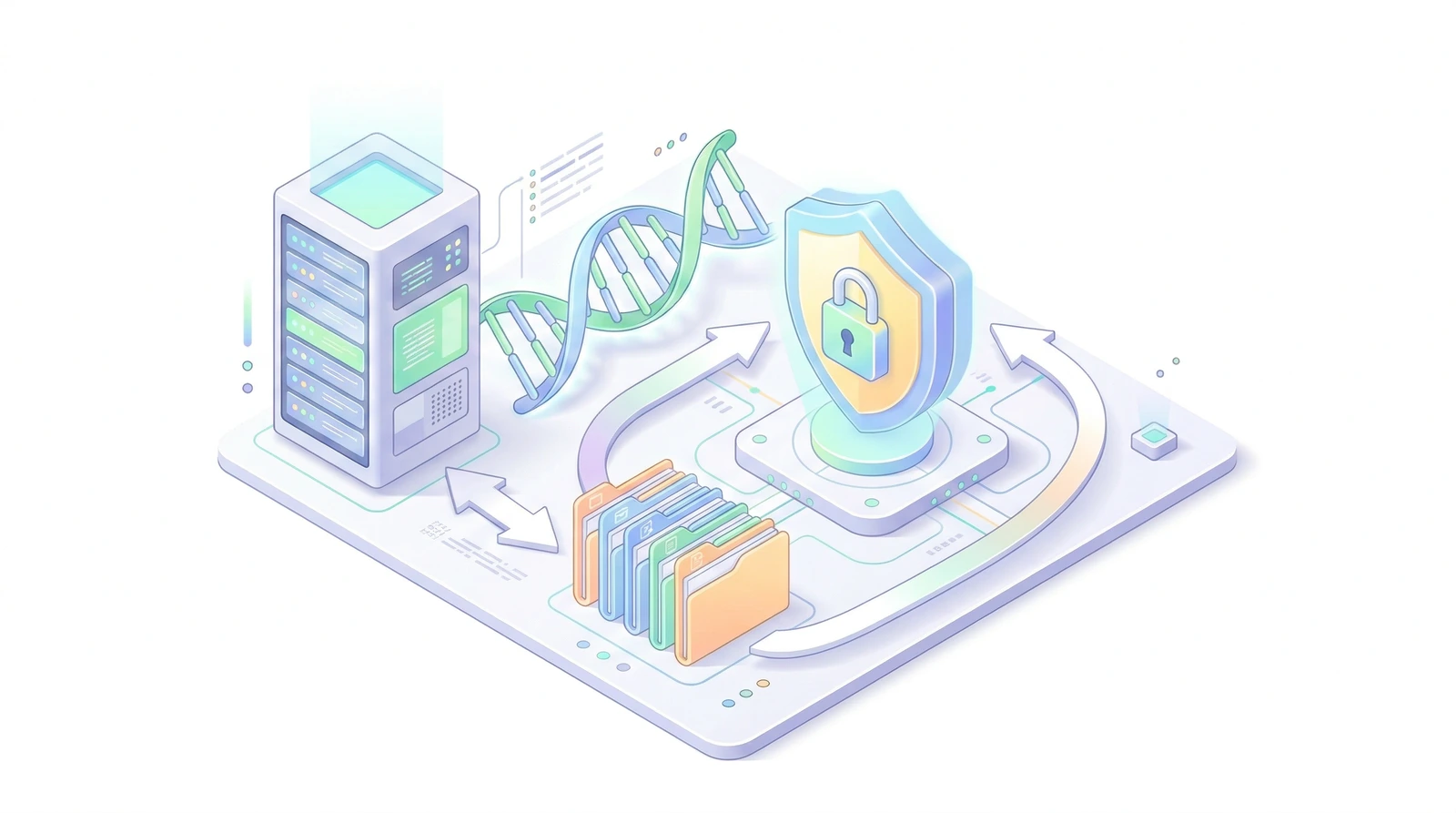
Genomics programs scale faster than legacy data management, demanding a governance framework anchored in FAIR principles and pragmatic operations.
- FAIR-aligned governance turns genomic datasets into strategic assets by making them discoverable, accessible, interoperable, and reusable across pharma R&D teams.
- A five-step model—stewardship, standardization, hybrid infrastructure, balanced security, and lifecycle management—keeps data quality high while containing complexity.
- Disciplined governance accelerates discovery, enables AI/ML initiatives, and reduces long-term storage and compliance costs.
The age of genomic medicine is here, but it's drowning in its own success. Pharma R&D pipelines are generating petabytes of sequencing data, creating a digital tsunami that legacy data management practices simply cannot handle. The result is a familiar state of organizational chaos: valuable datasets are lost in isolated data silos, promising insights are buried in murky data swamps, and teams waste precious time and resources duplicating work.
This isn't just an IT problem; it's a direct threat to R&D velocity and innovation. When data is disorganized, projects stall, compliance risks multiply, and the promise of data-driven discovery remains just that—a promise.
To unlock the true value of your genomic assets, you need a strategic framework for data governance.
The North Star: Why the FAIR Principles Are Critical for R&D ROI
Before building a framework, we need a guiding philosophy. The FAIR principles—Findable, Accessible, Interoperable, and Reusable—provide the blueprint for transforming data from a liability into a strategic asset.
For an R&D leader, FAIR isn't a technical checklist; it's a business mandate:
- Findable: Can your scientists easily discover relevant datasets from past experiments, or are they starting from scratch every time?
- Accessible: Once found, can the right people access the data through clear, secure protocols, or is it locked away by arcane permissions?
- Interoperable: Can you integrate data from different studies, platforms, or CROs to ask bigger questions, or is everything in a proprietary format?
- Reusable: Is your data annotated and contextualized well enough to fuel future discovery projects, including the AI/ML models that will define the next decade of pharma?
Adopting a FAIR mindset is the first step toward maximizing the long-term return on your most valuable investment: your data.
A 5-Step Governance Framework for Scalable Discovery
Building a governance model from scratch can feel daunting. We recommend a scalable, five-step approach that brings order to the chaos and lays the foundation for future growth.
1. Institute Data Stewardship:
Accountability is the bedrock of governance. The first step is to assign clear ownership for critical data assets. A Data Steward, typically a senior scientist or team lead, becomes responsible for the quality, integrity, and metadata of the data generated by their group. This isn't a bureaucratic role; it's a leadership position that ensures every dataset has a champion dedicated to preserving its value.
2. Drive Rigorous Standardization:
Data swamps are born from a lack of standards. To create a common language across your organization, you must define and enforce consistent requirements for:
- Data Formats: Standardize on formats for raw data (e.g., FASTQ, BCL) and processed data (e.g., BAM, VCF, AnnData).
- Metadata: Mandate a core set of metadata for every project and sample, including experimental conditions, batch information, and processing parameters. This is non-negotiable.
- Nomenclature: Create a universal naming convention for projects, samples, and files. A simple, enforced system is the antidote to confusion.
3. Architect a Hybrid Infrastructure:
The "cloud vs. on-prem" debate is a false choice. The right answer for scalable genomics is almost always "both." A hybrid model allows you to balance cost, performance, and collaboration:
- Cloud: Ideal for flexible, large-scale compute, long-term archival (e.g., AWS Glacier, Azure Blob Storage), and secure collaboration with external partners.
- On-Prem: Best suited for processing raw, heavy data directly from sequencing instruments and for meeting specific data residency requirements.
4. Balance Security with Access:
In a regulated environment, data security is paramount. A robust governance framework must enforce compliance with regulations like HIPAA and GDPR through granular access controls. However, security should not become a barrier to research. The goal is to create a system of tiered access where researchers can easily and securely access the data they are authorized to use, without putting the organization at risk.
5. Implement Data Lifecycle Management:
Not all data is created equal, and not all of it needs to be stored in hot, expensive storage forever. A clear data lifecycle policy automates the process of moving data from active use to archival and, eventually, to deletion. This requires defining clear retention periods based on project status, publication record, and regulatory mandates. Proactive lifecycle management is one of the most effective tools for controlling long-term data costs.
The Payoff: From Data Chaos to Strategic Asset
Implementing a data governance framework is not an overnight project, but the payoff is transformative. Organizations that master their data ecosystem are better positioned to:
- Accelerate Discovery: By making data findable and reusable, you empower scientists to build on past work, validate findings faster, and make go/no-go decisions with greater confidence.
- Enable AI and Machine Learning: Clean, standardized, and well-annotated data is the fuel for advanced analytics. A governance framework is a prerequisite for any serious AI/ML initiative.
- Reduce Long-Term Costs: By eliminating data redundancy, optimizing storage, and automating lifecycle management, you can significantly lower your total cost of data ownership.
Building a robust data governance plan is a strategic imperative for any pharma organization that sees its data as a competitive advantage. Our expertise isn't just in running the analysis; it's in designing the systems that make the analysis valuable.
If you're ready to turn data chaos into a strategic asset, let's start a conversation.